Pilgrim Hot Springs: Soaking in the Arctic Oasis 60 Miles North of Nome
- November 1, 2026
Pilgrim Hot Springs is the only hot spring you can drive to on the Seward Peninsula, and the drive is half the reason to go. Water rises at about 130 degrees Fahrenheit, too hot to touch at the source, and is cooled before it fills a rustic outdoor pool. The site is on the National Register of Historic Places, roughly 60 road miles north of Nome. Access is summer-only, the day-use fee is $10, and the road requires a high-clearance vehicle.
What you find at the end is an improbable grove of tall cottonwoods at nearly 65 degrees north latitude, on land owned by Mary's Igloo Native Corporation, alongside the weathered remains of Our Lady of Lourdes mission and orphanage, which operated here from about 1905 until 1941. For travelers based in Nome there is no other warm-water option within driving distance; the region's other famous soak, Serpentine Hot Springs in Bering Land Bridge National Preserve, requires a flight.
The soak: 130-degree water in a cottonwood grove
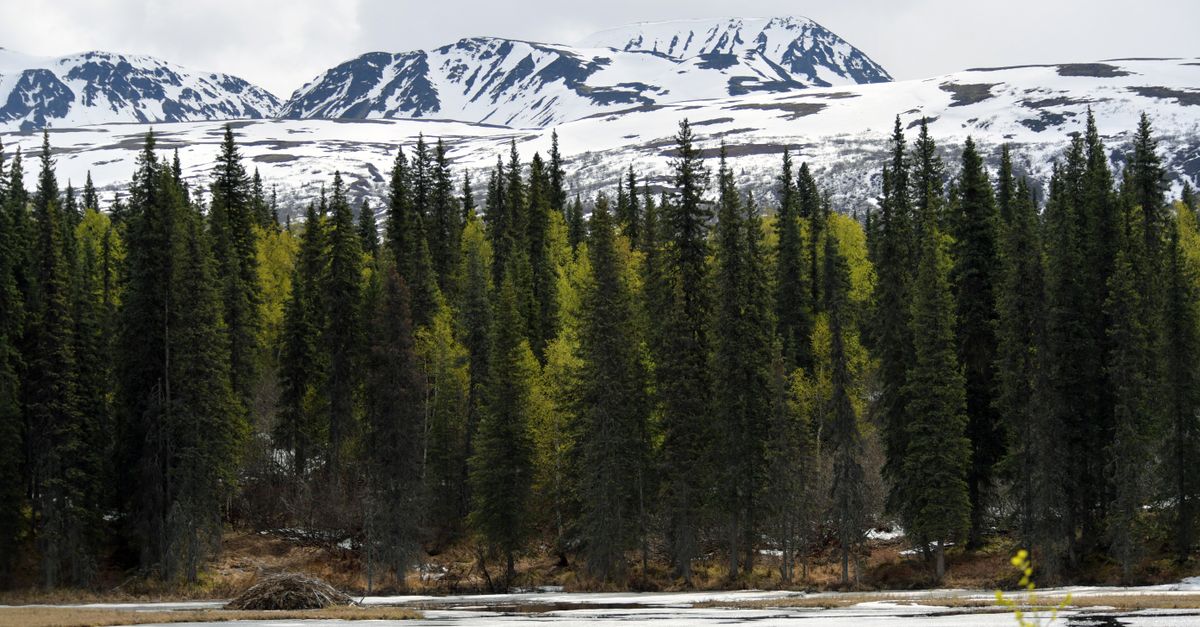
The source water at Pilgrim comes out of the ground at about 130°F, hot enough to scald, and it has to be tempered before it reaches the soaking pool. The pool itself is primitive in the best sense of the word: an outdoor basin with a wooden surround, a changing room, an outhouse, and summer caretakers who collect the $10 day-use fee in cash. Nothing about the setup is fancy, and nothing needs to be. You sit in hot mineral water on the tundra's edge, steam peeling off the surface, cool air on your face, inside a grove of tall balsam poplar, the cottonwoods, that has no equal anywhere else on the Seward Peninsula.
Because the source runs so hot, ask the caretakers how the pool is running before you commit, and test the water with a hand before you slide in. A first soak of fifteen or twenty minutes is plenty at these temperatures. The caretakers keep the pool maintained, so the water is in better shape than you'd expect this far out. On a mid-July visit I soaked for ninety minutes, until nearly midnight, under a sky that never got dark. Steam drifted through the cottonwoods while a cow moose worked the head-high grass at the meadow's edge.
Getting there: sixty miles of gravel from Nome
The route follows the Nome-Council Road out of town. The pavement runs along Safety Sound for the first stretch, famous for muskox sightings, for seabirds, and for the occasional rare Asiatic vagrant. After that it's gravel for the long run east. Near the old mining town of Council, today a scatter of seasonal cabins, you turn onto the Pilgrim road and follow the Pilgrim River valley several miles to the springs. Count on roughly 60 road miles and two to three hours each way in good conditions.
The road crosses low, boggy tundra that stays soft long after the snow goes, and it's the soft ground, not the hills, that decides whether you make it. A high-clearance vehicle is the practical minimum and four-wheel drive is strongly advised; passenger cars that attempt it in wet years usually regret it. The window is summer-only, early July through mid-September in a typical year, and conditions shift with every hard rain, so check the current status with the Nome Visitor Center or the site's caretakers before you commit a day.
Fuel up in Nome, carry a spare tire, food, and water, and assume cell coverage dies shortly after the pavement does. There are no services between Nome and the springs, and a breakdown out here is measured in hours, not minutes, so travel with a second vehicle when you can arrange it.
Why hot water rises here
Pilgrim Hot Springs sits at the southern flank of the Kigluaik Mountains, where deep faults have fractured ancient metamorphic rock and allow water to circulate thousands of feet down, absorb the earth's heat, and rise again under its own pressure. The springs and the shallow geothermal wells drilled at the site in the early 1980s flow artesian, no pump required. Between 2010 and 2016, researchers with the University of Alaska Fairbanks' Alaska Center for Energy and Power drilled monitoring holes and mapped the reservoir. They sized it as a candidate for a small geothermal power plant that could one day feed Nome's grid. No plant has been built, but the work confirmed what the cottonwoods have been advertising all along: this is a substantial geothermal system, not a shallow lukewarm seep.
The warm ground does the rest. Soil that stays unfrozen year-round supports the poplar grove, head-high grass, and lush forbs. That habitat makes Pilgrim one of the better birding sites on the Seward Peninsula; warblers and other species associated with the interior rather than the wind-scoured coast turn up here. Moose bed down in the meadow, sandhill cranes pass overhead in fall, and brown bears move through often enough that you should manage your food and stay alert. The springs are a warm-pocket refugium, an island of interior-Alaska habitat marooned on the tundra, and soaking in the middle of it is the closest you'll come to swimming through the geology.
A century of use on warm ground
The mission and the orphanage
The Iñupiat of the Seward Peninsula knew these warm waters long before anyone surveyed them, and the site sits within the traditional territory of the people of Mary's Igloo, the village upstream on the river that old charts labeled the Kruzgamepa and later maps renamed the Pilgrim. Gold miners soaked here at the turn of the century, when nearby Council boomed as a mining hub and a private bathhouse resort did brisk business. Around 1905 Catholic missionaries established Our Lady of Lourdes Mission, and after waves of measles and influenza tore through Norton Sound villages, the 1918 pandemic above all, the mission became best known as an orphanage that took in children from across the region.
The priests and sisters ran a farm that was astonishing for the Arctic: cattle, pigs, poultry, and fields that yielded potatoes and hardy vegetables in quantities that visitors marveled at, with produce shipped out to Nome. The mission closed in 1941, done in by the economics of a wartime territory, and its buildings began the slow decline visible today.
Ruins, register, and renewal
After 1941 the site never emptied. Nome families drove the long gravel road out through the middle decades of the century for picnics and soaks, and the pool stayed in use even as the orphanage, church, and farm buildings weathered toward ruin. In 1982 the site was listed on the National Register of Historic Places. Under the Alaska Native Claims Settlement Act the land was conveyed to Mary's Igloo Native Corporation, and in recent decades the corporation, together with university, heritage, and community partners, has stabilized buildings, kept summer caretakers on site, and kept the water flowing for visitors.
Walk the grounds between soaks and the scale of the place sinks in: the old orphanage, the church foundation, rusting boilers and farm machinery, all slowly being reclaimed by grass the warm ground makes possible. Few hot springs come with this much history attached, and fewer still let you soak in the middle of it.
Planning your soak
Target early July through mid-September, when the road is dry and the light is long; by late summer the tundra is turning color and the cranes are staging for departure, which is its own show. Bring cash for the $10 day-use fee, a towel, drinking water, and layers. Even on a mild day you'll want a warm layer for the walk between pool and changing room. Mosquitoes can be serious in July, so pack repellent and a head net.
Tent camping is permitted near the springs if you want the late light and the morning steam, though facilities are limited to what the caretakers maintain, so treat it as dry camping and pack out everything you bring. Check road and site conditions before leaving Nome; the Nome Visitor Center and the site's operators are the best sources. File a rough plan with someone in town, since the valley has no reliable cell service. Give the trip a full day; the drive alone takes five or six hours round trip.
Sixty miles of gravel buys hot water, warm ground, a century of history, and very likely no crowd.